Why Did Armenian and Azerbaijan War Ending Explained
In the years after the war Azerbaijans larger population and enormous oil wealth meant that it could grow more and more powerful afford more and better foreign military equipment. Its population is mostly ethnic Armenians with a minority of western Azerbaijanis.
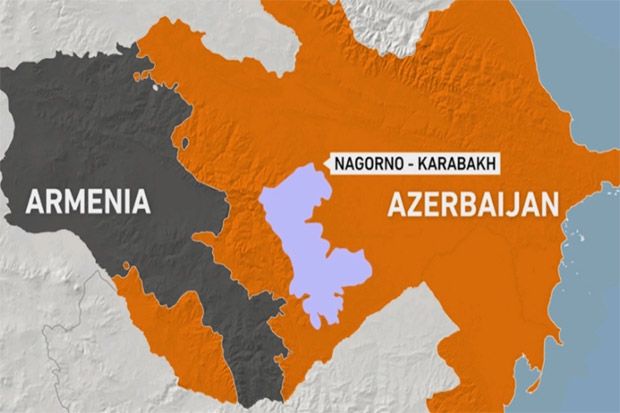
The Armenian Azerbaijan Conflict In Human Rights Violation In Perspective Regional Security Kompasiana Com
Armenia says that on the morning of September 27 Azerbaijan launched air and artillery attacks on Nagorno-Karabakh while Baku says it was conducting a counter-offensive.

. The broader international environment the. Why Azerbaijan Armenia Are On Edge of Full-Blown War. You can find this video and all of Voxs videos on YouTube.
Azerbaijans internal turmoil and Russian backing for Armenia. The Armenia-Azerbaijan clash though based on a historical rivalry reflects the tensions that remains in eastern Europe region - where the Muslim-Christian divide is once again playing a major role in shaping geopolitical tensions. The war resumed last.
The Armenians are and have for the last three decades always been the aggressors. Armenia has declared martial law and ordered its military to mobilise after a major flare-up in violence with Azerbaijan broke out over the disputed region. Tensions first rose when in the 1980s Soviet Russia gave control of the region to Azerbaijan despite its majority Armenian population.
A ceasefire was agreed in 1994 but. After the collapse of the Soviet Union the ethnic Armenian enclave declared independence in 1991 and began a war that ended in a 1994 ceasefire. The conflict stems from Joseph Stalins the former premier of the Soviet Union decision to place Armenian majority region of Nagorno-Karabakh in Azerbaijan after the.
Russian Mil Mi-24 shootdown. Nagorno-Karabakh is a mountainous Armenian region within Azerbaijan. In late September Azerbaijan Lunched a major offensive and says it wants to force Armenia to withdraw entirely from NAGORNNO-KARABAKH.
Outgunned by advanced drones Armenian forces had no choice but to retreat and finally agree to a ceasefire in early November. Once the USSR collapsed in 1991 and the republics became independent nations war broke out. The 2020 Nagorno-Karabakh war was an armed conflict in the disputed region of Nagorno-Karabakh and the surrounding territories.
This enticed a referendum in Nagorno. These factors helped Armenia win control. They have been running their own affairs with support from Armenia since Azerbaijans troops were pushed out in a war in the 1990s.
The reason lies in a series of grave miscalculations whereby Armenias leadership misread almost everything about this conflict. In 1724 Ottoman troops invaded the Armenian land and attacked the Nagorno Karabakh Armenian population who yet again rose to struggle for their independence. A 1994 cease-fire left Armenian and Azerbaijani forces facing each other.
To understand the early history of this conflict why this latest war began and how it dramatically reshapes the region watch this episode of Vox Atlas. Azerbaijan is simply trying to take back what is rightfully its own land. The region is internationally recognized as part of Azerbaijan but was occupied by Armenia following a war in 1988 and through the peace agreement of 1994 became an Armenian enclave.
The Azerbaijani Defense Ministry claimed that Armenian forces started shelling the town of Tartar on Monday morning while Armenian officials said the fighting continued. But it won the war in the early 1990s largely because of two factors. The war has Triggered a huge mobilization among Armenias as people are signing up.
A top territorial official.
Turkey S Intervention Threatens To Expand Conflict In Nagorno Karabakh
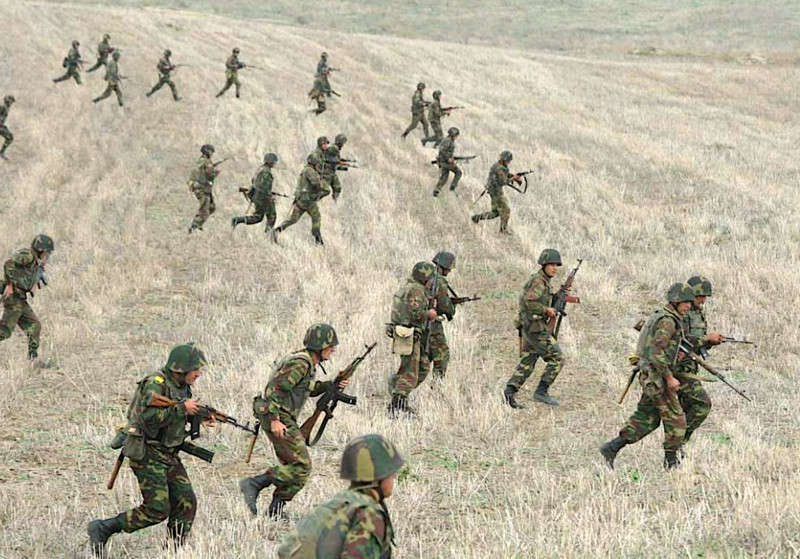
Armenia Azerbaijan War Line Of Contact

Analysis What S Sparking Azerbaijan Armenia Clashes On First War Anniversary

Nagorno Karabakh Conflict Wikiwand


Comments
Post a Comment